

Thank you for Subscribing to Food Business Review Weekly Brief
This article is part of Food Business Review's insights series featuring expert contributions nominated by our subscribers and reviewed by our editorial team.

The Clean Label Revolution of HPP Model in Latin America
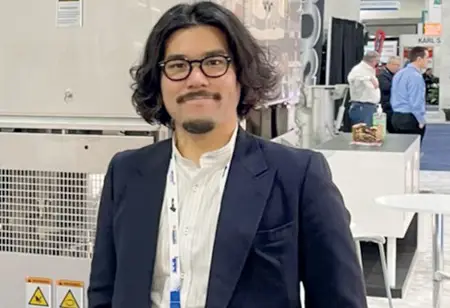
Arturo Costabal Claro is the founder and director of ALTA-HPP Services. A long-time advocate for innovation in food processing, he has led the adoption of High-Pressure Processing (HPP) technology across Latin America through an open-access model that enables producers to improve food safety, preserve product quality and compete in global clean-label markets.
Behind the operational success and strategic vision of ALTA-HPP Services stands its director and founder, Arturo Costabal Claro. Since the project's launch in 2017 in Santiago, his leadership has been instrumental in transforming a pioneering venture into Chile's primary High-Pressure Processing (HPP) hub. The company offers open-access tolling (co-packing or toll processing) services, enabling food manufacturers of all sizes to access advanced solutions in food safety, shelf-life extension and quality assurance.
Under Costabal Claro's management, the plant has scaled its technical capacity, acting as a key bridge to forge alliances with large corporations while simultaneously opening the doors of high technology to local small and medium-sized enterprises (SMEs).
“Our mission is to provide manufacturers with the ability to reinforce product safety and extend freshness through HPP technology,” states Claro. This vision directly addresses a profound shift in consumer expectations across Latin America.
The global pursuit of wellness has firmly established the “clean label” trend: the market demands fresh, natural and preservative-free foods, but with an extended shelf life capable of overcoming the region's complex logistical challenges. From a sustainability standpoint, high-pressure technology mitigates food waste by naturally extending product durability in cold chains, guaranteeing a premium quality that protects brand reputation.
Transforming the Industry through Innovation and Democratic Access
Faced with this demand for premium products, HPP technology opens extraordinary commercial opportunities. As a non-thermal process utilizing pure hydrostatic pressure (6,000 bar / 87,000 psi), nutritional properties, flavor and original color remain completely intact. This is critical for the success of delicate categories like avocado and its derivatives, where adding artificial preservatives that alter quality is avoided, turning this safe shelf-life extension into a direct passport for exporting to high-value international markets.
For manufacturers, outsourcing the process to ALTA-HPP Services functions as an advanced R&D and brand protection center. The service includes a meticulous, complimentary initial technical protocol for the client that evaluates the behavior of the packaging (trays, bottles, labels and inks) under extreme pressure to ensure its perfect integrity before hitting store shelves. This operation is carried out under strict confidentiality, with each recipe protected by rigorous non-disclosure contracts, and is complemented by logistical agility that allows treated foods to return to distribution channels the same or the following day.
An Overview of ALTA-HPP’s Expansion in Latin America
The growth of high-pressure processing reflects a clear macroeconomic trend across Latin America. While the northern part of the continent, led by Mexico, has historically established itself as the global giant of the sector due to massive guacamole exports, the Southern Cone is driving the most dynamic diversification on the continent. South America is adopting technology at a rapid pace, expanding its applications into highly competitive sectors such as premium juices, fresh salsas, ready-to-eat (RTE) meals and high-end meat products.
Within this dynamic regional map, the real impact and operational capacity of the Chilean plant are consolidated under outstanding performance parameters:
• World-Class Infrastructure: ALTA-HPP features industrial equipment developed by Hiperbaric, the undisputed global leader in high-pressure technology. This manufacturer boasts a 60 percent global HPP market share with more than 450 units installed across 50 countries.
• Processing Volume: Currently, the facility processes approximately 3.200.000 kilograms of food per year. The core of the operation is a Hiperbaric 300 machine, one of the most efficient solutions on the market, optimized for minimal energy consumption per kilo of processed products.
• Immediate Expansion Plans: To absorb the sharp increase in demand in the Southern Cone and ensure business continuity for its partners, the company is already planning the incorporation of a second Hiperbaric high-pressure unit, which will double its response capacity in the short term.
In the tolling business, mechanical availability is everything: a single hour of downtime can disrupt the supply chain of dozens of clients. This is where Hiperbaric’ s support makes the difference. With nearly half of its global equipment installed in the Americas, its value proposition goes far beyond advanced steel engineering; it is built on continuous partnership, including food consultancy services, 24/7 field engineering and ultra-agile spare parts logistics that minimize any operational risk.
Future Projects in Seafood Products
Looking ahead, HPP Alta points to Chile's extensive coastline and its aquaculture leadership as its next major frontier. The company is already conducting technical evaluations focused on high-value seafood products, such as premium salmon.
The technical challenge is fully achievable. It requires adjusting precise pressure parameters to cold-pasteurize seafood without affecting the natural color, texture or organoleptic qualities of fresh fish.
Furthermore, high pressure processing also enables shucking and 100 percent meat extraction from raw oysters and bivalve mollusks. This process guarantees food safety by effectively controlling Vibrio and Norovirus, while doubling the shelf life of the fresh product. This application opens up a wide array of opportunities for the seafood industry to offer ready-to-eat, value-added products. Raw cod and other white fish, octopus, cooked crab meat or seafood- and fish-based salads and prepared meals are just some of the many products that can benefit from this application.
The success of this development will create a new value-added export category for Chile, solidifying ALTA HPP Services as the definitive benchmark for the future of food safety in the region.
Behind the operational success and strategic vision of ALTA-HPP Services stands its director and founder, Arturo Costabal Claro. Since the project's launch in 2017 in Santiago, his leadership has been instrumental in transforming a pioneering venture into Chile's primary High-Pressure Processing (HPP) hub. The company offers open-access tolling (co-packing or toll processing) services, enabling food manufacturers of all sizes to access advanced solutions in food safety, shelf-life extension and quality assurance.
Under Costabal Claro's management, the plant has scaled its technical capacity, acting as a key bridge to forge alliances with large corporations while simultaneously opening the doors of high technology to local small and medium-sized enterprises (SMEs).
“Our mission is to provide manufacturers with the ability to reinforce product safety and extend freshness through HPP technology,” states Claro. This vision directly addresses a profound shift in consumer expectations across Latin America.
The global pursuit of wellness has firmly established the “clean label” trend: the market demands fresh, natural and preservative-free foods, but with an extended shelf life capable of overcoming the region's complex logistical challenges. From a sustainability standpoint, high-pressure technology mitigates food waste by naturally extending product durability in cold chains, guaranteeing a premium quality that protects brand reputation.
Transforming the Industry through Innovation and Democratic Access
Faced with this demand for premium products, HPP technology opens extraordinary commercial opportunities. As a non-thermal process utilizing pure hydrostatic pressure (6,000 bar / 87,000 psi), nutritional properties, flavor and original color remain completely intact. This is critical for the success of delicate categories like avocado and its derivatives, where adding artificial preservatives that alter quality is avoided, turning this safe shelf-life extension into a direct passport for exporting to high-value international markets.
For manufacturers, outsourcing the process to ALTA-HPP Services functions as an advanced R&D and brand protection center. The service includes a meticulous, complimentary initial technical protocol for the client that evaluates the behavior of the packaging (trays, bottles, labels and inks) under extreme pressure to ensure its perfect integrity before hitting store shelves. This operation is carried out under strict confidentiality, with each recipe protected by rigorous non-disclosure contracts, and is complemented by logistical agility that allows treated foods to return to distribution channels the same or the following day.
An Overview of ALTA-HPP’s Expansion in Latin America
The growth of high-pressure processing reflects a clear macroeconomic trend across Latin America. While the northern part of the continent, led by Mexico, has historically established itself as the global giant of the sector due to massive guacamole exports, the Southern Cone is driving the most dynamic diversification on the continent. South America is adopting technology at a rapid pace, expanding its applications into highly competitive sectors such as premium juices, fresh salsas, ready-to-eat (RTE) meals and high-end meat products.
Within this dynamic regional map, the real impact and operational capacity of the Chilean plant are consolidated under outstanding performance parameters:
• World-Class Infrastructure: ALTA-HPP features industrial equipment developed by Hiperbaric, the undisputed global leader in high-pressure technology. This manufacturer boasts a 60 percent global HPP market share with more than 450 units installed across 50 countries.
• Processing Volume: Currently, the facility processes approximately 3.200.000 kilograms of food per year. The core of the operation is a Hiperbaric 300 machine, one of the most efficient solutions on the market, optimized for minimal energy consumption per kilo of processed products.
• Immediate Expansion Plans: To absorb the sharp increase in demand in the Southern Cone and ensure business continuity for its partners, the company is already planning the incorporation of a second Hiperbaric high-pressure unit, which will double its response capacity in the short term.
-
Our mission is to provide manufacturers with the ability to reinforce product safety and extend freshness through HPP technology.
In the tolling business, mechanical availability is everything: a single hour of downtime can disrupt the supply chain of dozens of clients. This is where Hiperbaric’ s support makes the difference. With nearly half of its global equipment installed in the Americas, its value proposition goes far beyond advanced steel engineering; it is built on continuous partnership, including food consultancy services, 24/7 field engineering and ultra-agile spare parts logistics that minimize any operational risk.
Future Projects in Seafood Products
Looking ahead, HPP Alta points to Chile's extensive coastline and its aquaculture leadership as its next major frontier. The company is already conducting technical evaluations focused on high-value seafood products, such as premium salmon.
The technical challenge is fully achievable. It requires adjusting precise pressure parameters to cold-pasteurize seafood without affecting the natural color, texture or organoleptic qualities of fresh fish.
Furthermore, high pressure processing also enables shucking and 100 percent meat extraction from raw oysters and bivalve mollusks. This process guarantees food safety by effectively controlling Vibrio and Norovirus, while doubling the shelf life of the fresh product. This application opens up a wide array of opportunities for the seafood industry to offer ready-to-eat, value-added products. Raw cod and other white fish, octopus, cooked crab meat or seafood- and fish-based salads and prepared meals are just some of the many products that can benefit from this application.
The success of this development will create a new value-added export category for Chile, solidifying ALTA HPP Services as the definitive benchmark for the future of food safety in the region.
MORE FROM INSIGHTS

Food Safety and Quality Consultants, LLC
Arlen Keller, President, Food Safety and Quality Consultants, LLC
Food Safety and Quality Consultants: Practical Food Safety Culture Planning in an Ever-Changing Industry
Mayekawa USA
Jiro Kobayashi, Business Development Advisor, Food Division, Mayekawa USA
Why are meat plants investing in automation today?

Kirkman
Nick Chiacchiaro, Marketing Manager, HTO Nevada d.b.a. Kirkman
Two Great Products from a Kirkman®-a Trusted Brand for more than 7 Decades

Clark Influence
Valentine Fourmentin, Senior Business and Project Development Manager
Shaping the Future of Food Service: 5 key marketing takeaways from SIAL Toronto
EXPLORE OUR KNOWLEDGE NETWORK
The articles from these contributors are based on their personal expertise and viewpoints, and do not necessarily reflect the opinions of their employers or affiliated organizations.
